China has significantly expanded its use of waste-to-energy technology in recent years, with over 1,100 municipal waste incineration plants now operating across the country. These facilities not only help generate large amounts of electricity but also dramatically reduce the volume of waste sent to landfills while enabling the recovery of valuable materials such as copper, iron, and aluminum.
According to data from the China Biomass Energy Industry Promotion Association, by the end of 2024 the total installed capacity of waste-to-energy power plants had reached 27.38 gigawatts (GW), producing approximately 145.3 billion kilowatt-hours (kWh) of electricity. The technology works by burning municipal solid waste to create high-temperature flue gases, which are then used to produce steam that drives turbines and generates power.
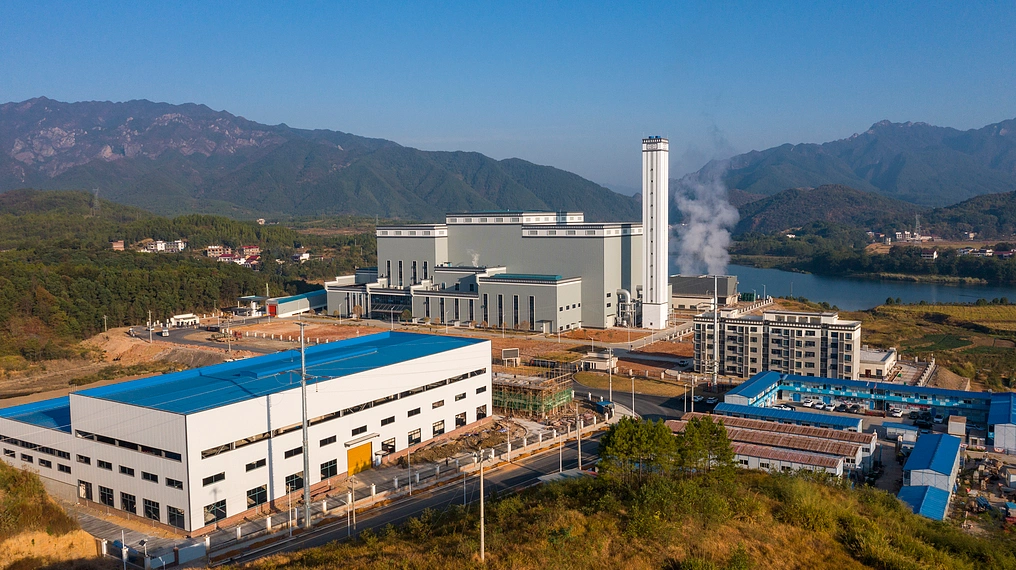
A waste-to-energy incineration plant in Shaoyang, Hunan Province. Photo: VCG
Nationwide, China’s daily waste incineration capacity reached about 1.158 million tonnes per day in 2024, far exceeding earlier government targets for 2025. As a result, the percentage of household waste processed by “harmless” methods - including incineration - has climbed to approximately 99%, while landfill use has dropped sharply. Between 2005 and 2024, the share of municipal waste treated by landfilling fell from around 85.2% to just 5%, while the proportion handled through incineration grew from 9.8% to 84.6%.
In Beijing’s Daxing District, for example, a single large waste-to-energy plant with a daily processing capacity of 5,100 tonnes can supply about 659 million kWh of electricity annually to the grid, after meeting its own operational needs - roughly enough to power 300,000 households each year.
Beyond generating power, waste incineration also supports resource recovery. At facilities such as the Daxing plant, around 20% of the incinerated material remains as ash, which is processed to extract metals and other recyclable materials, adding economic value while reducing environmental impact.
China’s efforts reflect a broader national strategy to manage urban waste while developing cleaner energy sources and reducing reliance on landfill disposal. The rapid expansion of waste-to-energy plants has helped the country address mounting municipal waste challenges and support its transition toward more sustainable waste management practices.
![[Expert Views] Vietnamese Women Harness AI and Technology to Shape a More Inclusive Future](https://vcystvqnqlquncjkhfqk.supabase.co/storage/v1/render/image/public/cm86yzxje006dqu90iz4rc2vg/Users/704025_imagejpeg?width=600&quality=80&resize=contain)
![[Expert Views] When Leaders Go Live: How Corporate Livestreams Can Boost Sales - and Trigger Crises](https://vcystvqnqlquncjkhfqk.supabase.co/storage/v1/render/image/public/cm86yzxje006dqu90iz4rc2vg/Users/448839_imagejpeg?width=600&quality=80&resize=contain)
![[Latest News] Vietnam International Digital Week 2025 Draws Top Experts to Discuss AI Governance](https://vcystvqnqlquncjkhfqk.supabase.co/storage/v1/render/image/public/cm86yzxje006dqu90iz4rc2vg/Users/640961_imagejpeg?width=600&quality=80&resize=contain)
![[Events] Women In Tech Vietnam, Women Tech Entrepreneurs and Amaris Consulting Unite to Foster Diversity and Equity in Tech](https://vcystvqnqlquncjkhfqk.supabase.co/storage/v1/render/image/public/cm86yzxje006dqu90iz4rc2vg/Users/716268_imagejpeg?width=600&quality=80&resize=contain)
![[Events] Founder and Principal of Spokesperson Training Vietnam to join Leader Talks: Fostering Diversity and Equity in Tech Workplace](https://vcystvqnqlquncjkhfqk.supabase.co/storage/v1/render/image/public/cm86yzxje006dqu90iz4rc2vg/Users/716398_imagejpeg?width=600&quality=80&resize=contain)
![[Events] Hub & People Manager at Mantu to join Leader Talks: Fostering Diversity and Equity in Tech Workplace](https://vcystvqnqlquncjkhfqk.supabase.co/storage/v1/render/image/public/cm86yzxje006dqu90iz4rc2vg/Users/844861_imagejpeg?width=600&quality=80&resize=contain)
![[Events] Country Director of Women In Tech Vietnam to join Leader Talks: Fostering Diversity and Equity in Tech Workplace](https://vcystvqnqlquncjkhfqk.supabase.co/storage/v1/render/image/public/cm86yzxje006dqu90iz4rc2vg/Users/878447_imagejpeg?width=600&quality=80&resize=contain)
![[Events] Vice President of HR at KMS Technology to join Leader Talks: Fostering Diversity and Equity in Tech Workplace](https://vcystvqnqlquncjkhfqk.supabase.co/storage/v1/render/image/public/cm86yzxje006dqu90iz4rc2vg/Users/528093_imagejpeg?width=600&quality=80&resize=contain)
![[Events] Leader Talks: “Inclusive Leadership: Fostering Diversity and Equity in the Tech Workplace”](https://vcystvqnqlquncjkhfqk.supabase.co/storage/v1/render/image/public/cm86yzxje006dqu90iz4rc2vg/Users/94476_imagejpeg?width=600&quality=80&resize=contain)
![[Latest News] Vietnam’s NIC Director: NIC Has the Mandate to Attract Meta, Google, NVIDIA & Qualcomm](https://vcystvqnqlquncjkhfqk.supabase.co/storage/v1/render/image/public/cm86yzxje006dqu90iz4rc2vg/Users/511693_imagejpeg?width=600&quality=80&resize=contain)